Health-Tracking Rings vs Smartwatches: Which Wearable Wins in 2026?
- Last updated: April 29, 2026
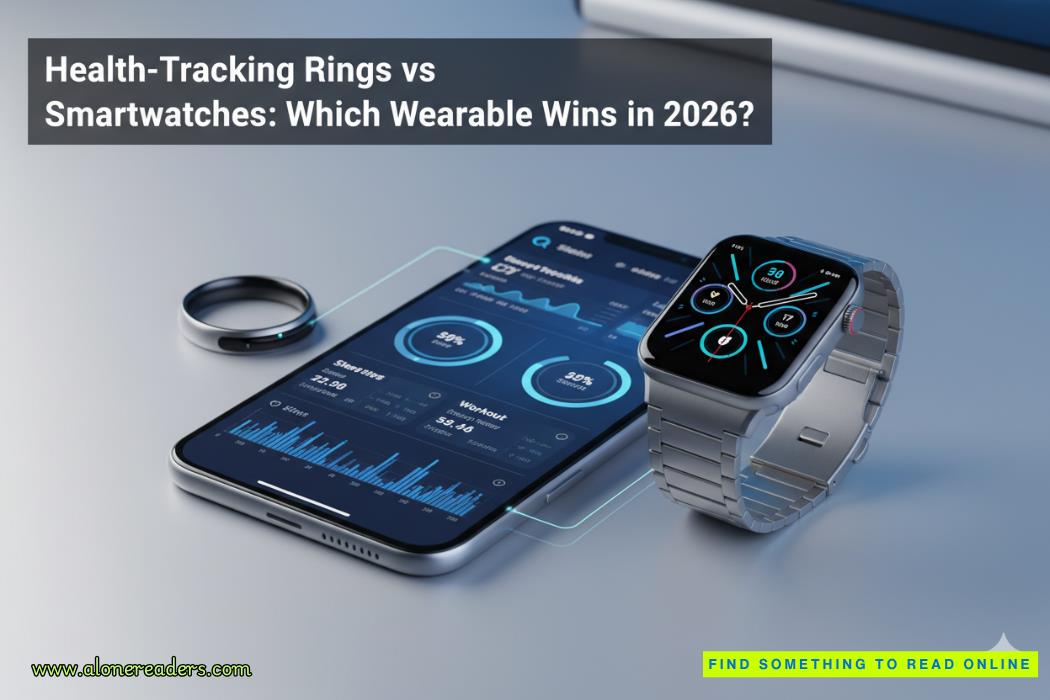
Health-Tracking Rings vs Smartwatches
Wearable health tech has matured, but rings and smartwatches still solve very different problems. In 2026, smart rings win on comfort, sleep-first tracking, and battery life, while smartwatches win on active coaching, GPS, safety tools, and all-in-one smart features.
The Real Choice in 2026
The question is no longer whether a ring or watch can track your health, because both can. The better question is whether you want a passive health monitor that disappears on your finger, or a wrist computer that constantly adds functions beyond health. Smart rings such as the Oura Ring 4 are designed to stay out of the way while tracking sleep, recovery, stress, and readiness, while Apple Watch Series 10 brings a much broader health and lifestyle stack, from ECG to workouts, crash detection, and apps.
For most buyers, the winner depends on daily behavior rather than raw specs. If you sleep lightly, dislike wearing a screen at night, or want the most discreet form factor possible, a ring is usually the better fit. If you run, cycle, train outdoors, take calls, want maps on your wrist, or need a device that doubles as a mini phone, a smartwatch is the stronger tool.
What Rings Do Best
Health-tracking rings are strongest when the goal is continuous monitoring with minimal friction. The best-known models focus heavily on sleep duration, sleep staging, heart rate, HRV, skin temperature trends, respiratory rate, and recovery scores rather than on-screen interaction. PCMag’s 2026 coverage highlights smart rings as discreet devices that track activity and sleep from an unobtrusive spot on the finger, and Oura’s current generation emphasizes sleep, cardiovascular capacity, stress resilience, and long-term trends in the app.
The biggest advantage is comfort. Rings are small, silent, and easy to forget about, which matters because sleep tracking only works well when you actually wear the device all night. That same simplicity also makes them better for people who do not want another screen buzzing with notifications, and some current rings stretch battery life to about a week or more, with RingConn and other 2026 contenders pushing even longer runtimes in some cases.
Rings are also becoming more focused on “readiness” and recovery. The data is less about telling you how hard you trained during a single workout and more about showing whether your body is ready for strain, illness, or lower-intensity recovery. That makes rings especially valuable for people who care about sleep quality, stress load, menstrual cycle tracking, and identifying patterns over weeks and months rather than minute-by-minute performance.
What Watches Do Best
Smartwatches are still the more capable wearables overall because they combine health tracking with utility. Apple Watch Series 10, for example, includes ECG, high- and low-heart-rate notifications, irregular rhythm notifications, temperature sensing, sleep stages, safety features such as Fall Detection and Crash Detection, and a much larger workout toolkit than most rings. It also adds GPS, water resistance, LTE options, and app support that rings simply cannot match.
This matters most during activity. A watch can show pace, distance, route, elevation, cadence, and live workout data on the screen while you are moving, which is a major advantage for runners, cyclists, hikers, and gym users who want real-time feedback. Apple’s workout list also shows how wide the watch category has become, spanning running, cycling, swimming, hiking, rowing, HIIT, yoga, dance, and multisport modes.
Smartwatches also win on emergency and convenience features. They can call for help, detect hard falls or crashes, show navigation cues, support payments, and deliver notifications in a more usable way than a ring ever could. For people who want one device to cover health, fitness, communication, safety, and light productivity, a watch remains the more complete purchase in 2026.
Sleep And Recovery
Sleep tracking is where rings usually pull ahead. Reviews and testing in 2026 consistently describe smart rings as excellent for sleep and recovery because they are comfortable enough to wear all night and are built around passive tracking rather than interaction. Oura Ring 4 is repeatedly positioned as a leader in sleep-focused health metrics, with improved sensors, long battery life, and deeper readiness and recovery insights.
Smartwatches can track sleep stages too, and Apple Watch Series 10 includes a dedicated Sleep app with sleep stages. But watches generally have a weaker sleep proposition because they are bulkier, more visible, and more likely to be taken off overnight by people who dislike wrist wear while sleeping. Even when a watch is accurate, comfort can reduce adherence, and adherence matters as much as sensor quality in real-world sleep tracking.
For users focused on recovery, rings often surface better trend language. They are not trying to interrupt you with a screen full of features; they are trying to summarize how rested, stressed, and physiologically prepared you are. That makes them especially compelling for biofeedback-minded users, remote workers, and people optimizing training around sleep debt and daily readiness.
Workout Tracking
This is where the smartwatch usually takes the lead. Rings can estimate daily activity and some exercise types, but a watch gives you far more control in the moment, including live stats, structured workouts, pace alerts, multisport support, and outdoor navigation. Apple Watch Series 10 is built with running, hiking, cycling, swimming, and training-load tools that make it useful as a genuine workout companion rather than just a tracker.
Rings are best for people who want the workout to be captured quietly in the background. They are useful for general activity, gym sessions, walking, and basic recovery context, but they are not ideal when you need immediate feedback mid-run or mid-ride. If you care about intervals, GPS routes, lap tracking, or training zones while exercising, the smartwatch is the better instrument.
That difference becomes even clearer for outdoor athletes. A watch can handle GPS, route guidance, elevation, and safety alerts without requiring your phone to stay in hand, which is something a ring can never replace. In practice, rings complement training more than they lead it.
Battery And Charging
Battery life is one of the cleanest advantages rings have in 2026. Many premium smart rings last around 5 to 8 days, and some models advertise even longer runs depending on usage, making them easier to live with if you hate nightly charging. That long battery life is one reason rings are so effective for sleep tracking: you are less likely to miss data because the device died overnight.
Smartwatches have improved, but they still live in a more demanding power class because they run displays, notifications, processors, radios, and often GPS. Apple Watch Series 10 is rated for up to 18 hours of normal use and up to 36 hours in Low Power Mode, which is respectable but still much shorter than the best rings.
This changes user behavior. With a ring, charging is an occasional habit. With a smartwatch, charging is often part of the routine, especially if you use workouts, cellular connectivity, brightness, and always-on display features. For people with busy schedules, the ring’s battery advantage can be the deciding factor.
Accuracy And Sensors
Accuracy is not a simple winner-takes-all issue, because different devices are strong at different measurements. Rings often perform very well for resting heart rate, sleep behavior, HRV trends, and skin-temperature-based recovery signals, and the Oura Ring 4 in particular is known for improved sensor design and stronger continuous health sensing. Some 2026 coverage also points to high reliability for heart-related measurements and strong alignment in sleep-focused use cases.
Smartwatches, however, are typically stronger for activity context and real-time movement data because they sit on a platform with more processing, better display support, and richer workout modes. Apple Watch Series 10 includes an ECG app, irregular rhythm notifications, and a broad sensor suite including heart sensor, temperature sensor, compass, altimeter, gyroscope, and more. That makes it more versatile, especially when the goal is broader wellness plus sport performance rather than just passive health trends.
The practical takeaway is simple: rings often feel more precise for sleep and recovery trends, while watches feel more useful for active, on-the-go health management. If you want deep overnight biometrics, the ring often wins the experience. If you want a fuller picture of real-life movement and training, the watch usually wins the ecosystem.
Comfort And Style
Comfort is where rings quietly dominate. Because they are light, compact, and jewelry-like, many people wear them longer and more consistently than a watch, especially during sleep, work, and formal settings. That matters because the best wearable is the one you actually keep on your body.
Watches are easier to read and more practical, but they are also more visible and more intrusive. A smartwatch changes the look of your wrist and often signals that you are carrying a tech device, whereas a ring can look like ordinary jewelry. For people who want health tracking without a “fitness gadget” aesthetic, the ring has a real advantage.
On the other hand, watches are easier to use for glancing at time, notifications, alarms, timers, maps, and workout prompts. That utility means the aesthetic trade-off often feels worth it to users who value convenience. In short, rings disappear; watches participate.
Smart Features
This is not a close contest. Watches are better computers, while rings are better silent trackers. Apple Watch Series 10 can run apps, handle safety alerts, support cellular use, integrate with Apple Pay, and work as a communication hub; rings are mostly dependent on the phone app for interpretation and history.
That app dependence is not a weakness in health analytics, but it limits what the ring can do in the moment. A ring can tell you what happened to your body, but a watch can tell you what to do next and can do it immediately on your wrist. For users who want minimalism, that is ideal; for users who want one device to replace some phone behavior, it is a drawback.
The smartwatch also wins on third-party integrations and platform breadth. It is simply a more mature product category for software, notifications, payments, and accessories, while rings are still largely health-first products that rely on a companion app to translate your data.
Best Device By User
The simplest way to choose is to ask what problem you want the wearable to solve every day. If it is “help me recover better and sleep more consistently,” choose a ring. If it is “help me train, navigate, communicate, and stay safe,” choose a smartwatch.
Final Verdict
In 2026, the health-tracking ring wins on elegance, comfort, sleep, and battery life, while the smartwatch wins on versatility, workout performance, GPS, safety, and smart features. The best wearable is not the one with the most sensors; it is the one that fits your habits well enough to collect data consistently and meaningfully.
If your priorities are recovery, sleep quality, and low-friction health monitoring, the ring is the smarter purchase. If you want a more complete digital companion for fitness and daily life, the smartwatch is still the overall champion.